WINGS Takes Flight: New Transition Program Brings Workplace Learning to Life
Quite a bit, when you’re learning how to work.
This week, the Institute for Disability Studies welcomed the first 10 participants into WINGS, a new employment training program developed in collaboration with the Mississippi Department of Rehabilitation Services (MDRS) for neurodiverse youth ages 14 to 21.
Led by IDS staff members Nellie Alliston and Amy Rhods, WINGS officially began Tuesday, September 1, with students from several school districts across the Hattiesburg metro area, as well as students who are homeschooled. Participants will meet twice each week through May, combining classroom instruction, hands-on practice and regular experiences in the community.
The goal isn’t to train every participant for the same job.
It’s to help each of them build skills they can take wherever they go next.
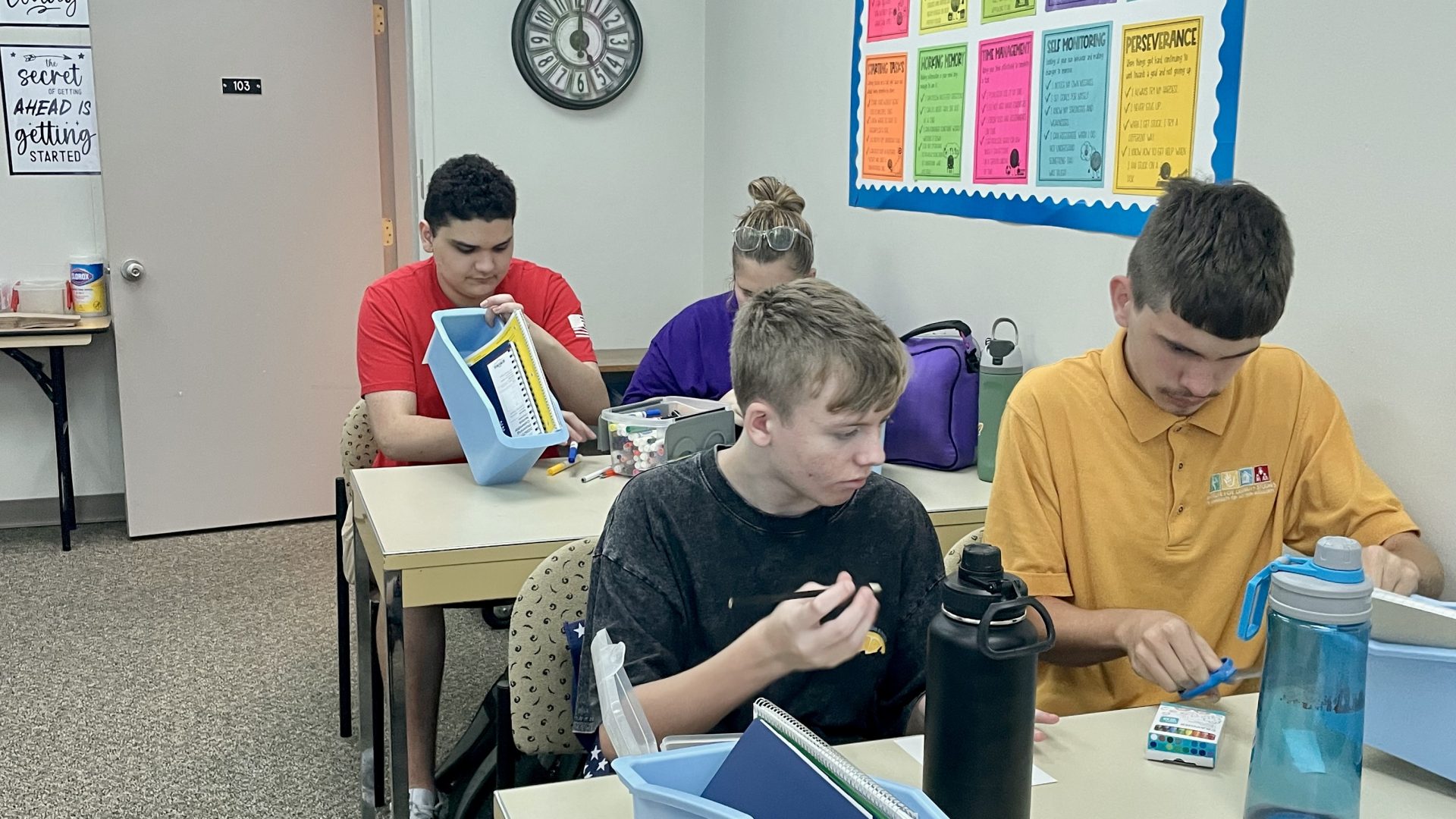
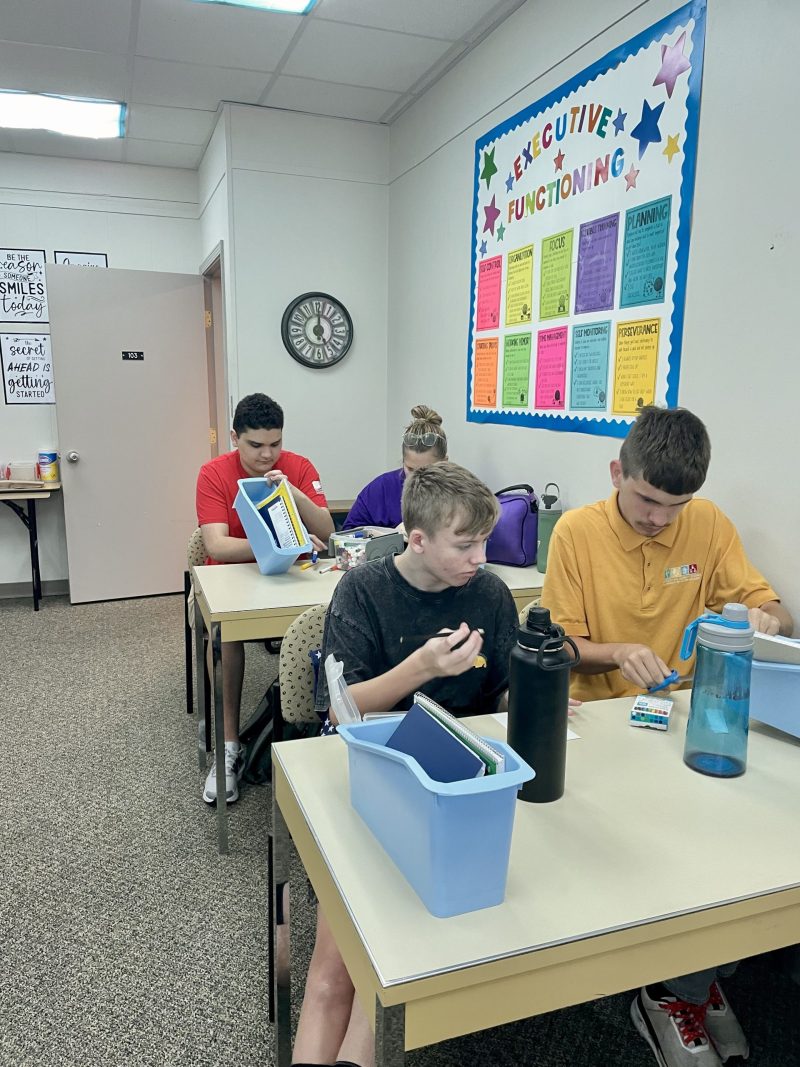
The new WINGS space in McLemore Hall looks a little different from a traditional classroom.
Alongside space for group instruction, the room includes a collection of hands-on stations designed to recreate tasks students may encounter at work and in everyday life.
At a mock grocery store, for example, students may receive a shopping list and a set budget and be asked to purchase the correct items. On the surface, they’re grocery shopping. Underneath that task, they’re practicing reading and following a list, locating items, making choices, managing money, staying within a budget and completing a multistep assignment.
At the medical station, participants learn how to take temperatures and other vital signs and use a scale. Beyond introducing tasks associated with health care settings, the station gives students opportunities to practice using equipment correctly, following procedures, recording information, communicating with another person and paying attention to accuracy.
A jewelry-making station challenges students to create a bracelet according to a customer’s specifications. Getting it right requires much more than stringing beads. Students have to interpret instructions, follow a sequence, pay attention to details and check their finished work against what the “customer” requested.
Those same skills could matter in a warehouse, restaurant, office, retail store, manufacturing facility or countless other workplaces.
At a mock ice cream stand, students practice following customer orders and completing tasks accurately. A cashier station introduces skills associated with transactions and customer service. A tool station provides another avenue for hands-on learning, while a clothing rack challenges students to sort garments by size and hang them correctly and consistently.
Each activity provides WINGS staff with an opportunity to look beyond whether a student simply completed the task. Can they follow directions with several steps? Do they notice when something isn’t right? Can they organize materials? Ask for clarification? Work carefully without sacrificing efficiency? Interact with a customer or coworker? Adapt when the task changes? Stay focused until a job is finished?
Those abilities aren’t limited to one occupation. They are transferable skills that can help a young person succeed across industries while also providing clues about the types of tasks and environments in which they may thrive.
Through WINGS, students can practice those skills in a setting where learning — including making mistakes, trying again and figuring out what works — is part of the process.
But not all WINGS training will happen inside McLemore Hall.
Every other week, participants will head into the community for work-related excursions that connect what they are practicing at IDS with actual workplaces.
These experiences will give students opportunities to tour businesses, see different occupations firsthand and meet the employers and professionals who do those jobs every day.
For a young person beginning to think about employment, those interactions can make the world of work a little less abstract. A job becomes more than a title on a list. Students can see the environment, observe what employees actually do, ask questions and begin considering what aspects of a workplace might — or might not — be a good fit for them.
Throughout the program, students will receive instruction in the five areas of Pre-Employment Transition Services: self-advocacy, job exploration counseling, postsecondary education counseling, work-based learning experiences and workplace readiness training.
Tuesday’s first session was only the beginning. Between now and May, the inaugural group will move between instruction and practice, simulated workplaces and real businesses, individual tasks and interactions with employers.
They may make bracelets, ring up purchases, sort clothes or take vital signs along the way.
But the most important thing they’re learning is something much bigger: how the skills they build today can travel with them into whatever comes next.